
The Franchise Uniform Playbook
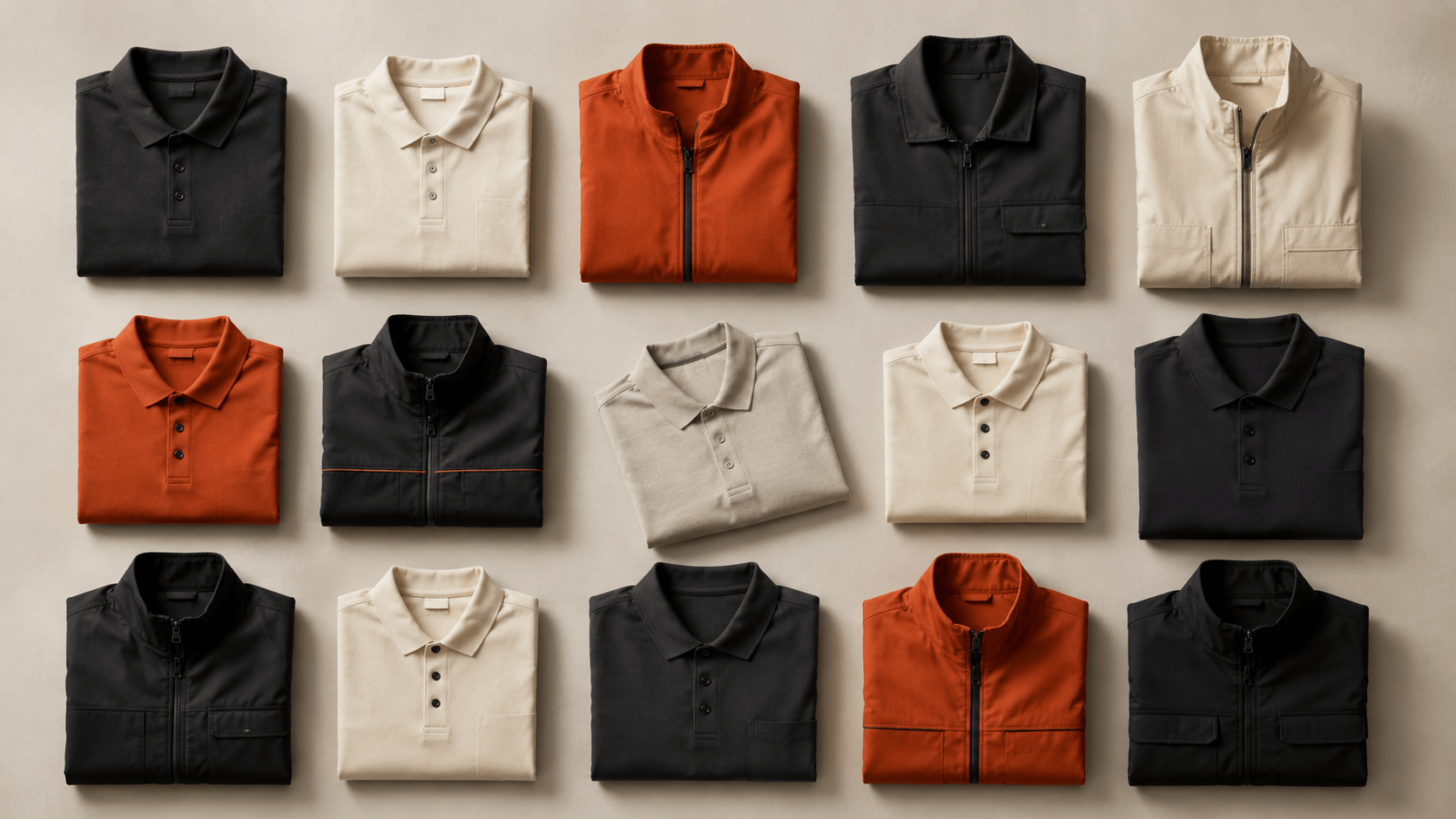
Organising uniforms across a franchise can be tricky. With lots of moving parts and different decision makers, keeping consistency across the group is a challenge.
The problem is that the way one franchise looks reflects on every other franchise. It's a brand risk. Your uniform and presentation are one of the first things a customer sees. As they say:
"You never get a second chance to make a first impression."
Franchisees pay for the brand, so it needs to be protected.
Wouldn't it be great if there was an easy way to fix that problem? Well, there is. This playbook sets out a simple and easy plan to a reliable franchise uniform system.
Two Starting Points, Same Destination
Uniform change in a franchise almost always starts one of two ways.
Head office starts it. Someone at HO decides brand consistency needs fixing across the group, sets the standard, and rolls it out to every site.
A franchisee starts it. One site is sick of chasing sizes, chasing invoices, or watching a neighbouring franchisee turn up looking scruffy - and decides to push for something better, either for themselves or the whole group.
Neither path is wrong, and they usually end up in the same place. What changes is who needs to be convinced, and in what order. If you're head office, skip ahead to Step 1. If you're a franchisee reading this hoping to get something moving, Step 1 is written with you in mind too - including what to do if head office isn't ready to lead it.
Part A: Get the Decisions Right
Before you touch a system, get agreement on what the system needs to protect and allow.
Step 1: Agree the Non-Negotiables
Every franchise group has a handful of things that should never vary from site to site: the logo, the brand colours, the core garments that make a site instantly recognisable as part of the group. These are the non-negotiables - not because flexibility is bad, but because inconsistency here is what actually damages the brand.
Getting agreement on this list looks different depending on where the push is coming from:
- Head office-led: HO defines the non-negotiables centrally - approved colours, garments, logo placement - and communicates it down as the new standard. Fastest path, but only works if HO actually owns the follow-through.
- Franchisee-led push: A franchisee builds a simple case - a handful of photos showing the inconsistency, a rough estimate of what group buying power could save - and takes it to head office or the franchisee council. The ask isn't "let me do my own thing," it's "let's agree a standard together." Frame it as protecting the asset everyone's paying into, not a compliance complaint.
- Franchisee-led autonomy: If head office isn't ready to run this centrally and isn't going to stop you either, you don't need to wait. Set your own non-negotiables at a site (or small group) level, stay inside the existing brand guidelines, and build in a way that could plug into a group-wide system later without a rebuild. Done well, this becomes the pilot that convinces head office to take it group-wide.
Whichever path you're on, the output of Step 1 is the same: a short, written list of what's fixed and who signs off on changes to it.
Step 2: Design the Range - Guardrails and Freedom
Once the non-negotiables are set, the next question is what's allowed to flex. This is where a lot of franchise uniform systems either get too rigid (everyone hates it, compliance drops) or too loose (the whole point of Step 1 unravels).
The useful split is:
- Core range - locked in. Same logo, same colours, same key garments across every site.
- Flexible range - site discretion within the guardrails. A site in a hotter climate might lean into lighter fabrics; a site with a lot of outdoor work might want a heavier jacket option. Same brand, sensible local variation.
This is also where good ideas travel. A site that's found a genuinely better garment - more durable, more comfortable, better value - shouldn't have to keep that discovery to itself, and other sites shouldn't have to independently rediscover the same problem. More on that in Step 5.
Part B: Build the System
The decisions in Part A only stick if the mechanics make them easy to follow - for years, not just for the first order.
Step 3: Consolidate Ordering, Unlock Buying Power
This is the most immediate and easiest to understand benefit: when a franchise group orders as one, everyone gets better pricing than any single site could get alone. Suppliers price on volume and reliability, and a group placing consistent, consolidated orders is a much stronger customer than twenty sites each ordering ad hoc.
The saving can be shared as lower per-item pricing across the board, or reinvested - better quality garments for the same spend, faster turnaround, more responsive service. Either way, it's a concrete number you can put in front of a franchisee or head office to make the case real, rather than theoretical.
Step 4: Put the System In
This is where the plan becomes something people actually use day to day. In practice, that means moving away from spreadsheets, one-off emails, and individual invoices, and into a single online ordering system built for exactly this structure:
- One portal, role-based access - head office sees the whole group; a site manager sees their own site; a staff member sees only what they're allowed to order.
- Approvals built in - orders that need sign-off get it automatically, without someone manually chasing emails.
- The range is pre-loaded - core items locked, flexible items available where you've allowed them, so nobody can accidentally order outside the brand.
- Reliable, repeatable supply - reordering is a few clicks, not a fresh negotiation every time.
- New starters and seasonal changes, sorted in a click - pre-set onboarding packs mean a new franchisee or new staff member gets the right kit from day one, no manual list-building. Seasonal swaps (summer to winter, or a new range update) roll out the same way, at group level or by site.
The system does the enforcement work that used to rely on everyone remembering the rules. That's what turns a one-off rebrand into something that actually holds twelve months later.
Two everyday problems it also quietly solves:
- New franchisee or new starter onboarding. Instead of building a uniform order from scratch every time someone joins, a pre-built starter pack is ready to go - correct sizes, correct range, one click to order. What used to take a back-and-forth of emails becomes a non-event.
- Seasonal changes. Swapping the group from summer to winter gear (or back) is a system update, not a re-briefing exercise. The right range appears automatically, at the right time, for every site.
Step 5: Run the Insight Loop
This is the part most franchise groups never get to - and it's arguably the biggest long-term win.
Once every site is ordering through the same system, you can see the whole group's ordering behaviour in one place: order history, spend by site, what's being bought and how often. That visibility turns into three practical benefits:
- Spot the outliers. A site quietly paying more for a similar item, or ordering something that's drifted outside the approved range, becomes obvious rather than invisible.
- Spot the gaps. If one site has found a garment that solves a problem - better durability, better fit for a specific role - that's now visible to the rest of the group instead of staying local knowledge.
- Keep improving the standard. The core and flexible range in Step 2 isn't set-and-forget. Real ordering data tells you what to add, what to retire, and where the guardrails should move.
This is the compounding part. The first order saves money. The system running for a year teaches the whole group how to buy better.
Where This Leaves You
The way one franchise looks reflects on every other franchise - that's the risk this playbook opened with. The fix isn't more rules or more policing. It's agreeing the few things that matter, building the flexibility to let sites be sensible about the rest, and putting a system in place that makes doing the right thing the easiest option.
If this looks like where your franchise is at - whether you're head office trying to get everyone aligned, or a franchisee trying to get something moving - we're happy to talk through what it could look like for your group.